Leadership is easiest when circumstances are stable, and the available options are clear. Its more revealing test occurs during disorder, when established plans no longer apply.
The fifth cluster, Adaptability, Resilience & Endurance, Crisis Management, Learning Agility, and Courage, addresses a leader's capacity to respond without losing direction.
21. Adaptability
Definition: Adjusting one's strategy or conduct as facts, circumstances, and political realities change.
Timelessness: Conditions are rarely permanent. Leaders who cannot adapt may continue applying outdated solutions even after reality has rendered them ineffective.
Abraham Lincoln entered the Civil War primarily committed to preserving the Union. As the conflict developed, he adapted by embracing emancipation as both a strategic necessity and a moral objective.
Franklin Roosevelt likewise moved from comparatively cautious fiscal positions toward the expansive experiments of the New Deal. His evolution demonstrated a willingness to alter his approach when the severity of the Great Depression made previous assumptions insufficient.
Winston Churchill's alliance with Joseph Stalin during World War II required a similar adjustment. Churchill temporarily set aside decades of anti-communist opposition to concentrate upon the more immediate threat presented by Nazi Germany.
 Old planBlockedNew routeSame goal
22. Resilience & Endurance
Definition: Recovering from setbacks and sustaining effort through prolonged adversity, loss, or failure.
Timelessness: Public leadership inevitably involves disappointment and hardship. Resilient leaders demonstrate the persistence necessary to pursue objectives that cannot be achieved quickly.
Abraham Lincoln buried two sons while leading a divided nation, yet continued carrying out the responsibilities of the presidency despite his grief.
Winston Churchill endured decades of political failure before returning as the wartime prime minister Britain required. His conduct during the country's darkest period demonstrated how one leader's endurance could help sustain an entire population through an existential threat.
Nelson Mandela's twenty-seven years in prison might have destroyed his political resolve. Instead, the experience strengthened the moral authority he later carried into South Africa's democratic transition.
Ernest Shackleton's leadership during the Endurance expedition similarly demonstrated how resilience could preserve a group's unity and determination under seemingly impossible circumstances.
23. Crisis Management
Definition: Stabilizing immediate danger, restoring public confidence, and establishing a practical path forward.
Timelessness: Crises repeatedly confront governments. Calm, organized leadership can reduce damage and, in some cases, create opportunities for institutional improvement.
George Washington held together a starving and exhausted army during the winter at Valley Forge, preserving a force that might otherwise have disintegrated.
Franklin Roosevelt used his first fireside chat to restore public confidence while banks were collapsing. John F. Kennedy's management of the Cuban Missile Crisis similarly demonstrated how measured decision-making could prevent nuclear war without abandoning American credibility.
Angela Merkel's responses to the 2008 financial crisis and the 2015 refugee crisis reflected a systematic approach to crisis management intended to preserve European unity through successive challenges.
24. Learning Agility
Definition: Absorbing new information quickly and adjusting one's understanding or conduct accordingly.
Timelessness: Political environments often change more rapidly than established plans. Leaders must therefore be capable of learning without losing their broader direction.
Benjamin Franklin educated himself across fields ranging from science to diplomacy, repeatedly adapting through experimentation and failure.
Theodore Roosevelt studied subjects such as naval history, conservation, and labor policy in order to approach government with substantive knowledge rather than slogans alone.
Jean Monnet's method of European integration similarly relied upon incremental progress, learning from the successes and failures of each stage before advancing toward the next.
25. Courage
Definition: Choosing to act despite danger, opposition, personal cost, or ridicule.
Timelessness: Fear often prevents people from taking necessary action. Courage allows leaders to pursue what they believe is right even when the consequences are uncertain.
Rosa Parks' refusal to surrender her bus seat required considerable personal courage and helped initiate the Montgomery Bus Boycott.
Harriet Tubman repeatedly risked her life through journeys on the Underground Railroad, helping enslaved people reach freedom.
John McCain, despite being tortured during his captivity in Vietnam, refused early release out of loyalty to the prisoners who would have remained behind.
Why This Cluster Matters for WATT
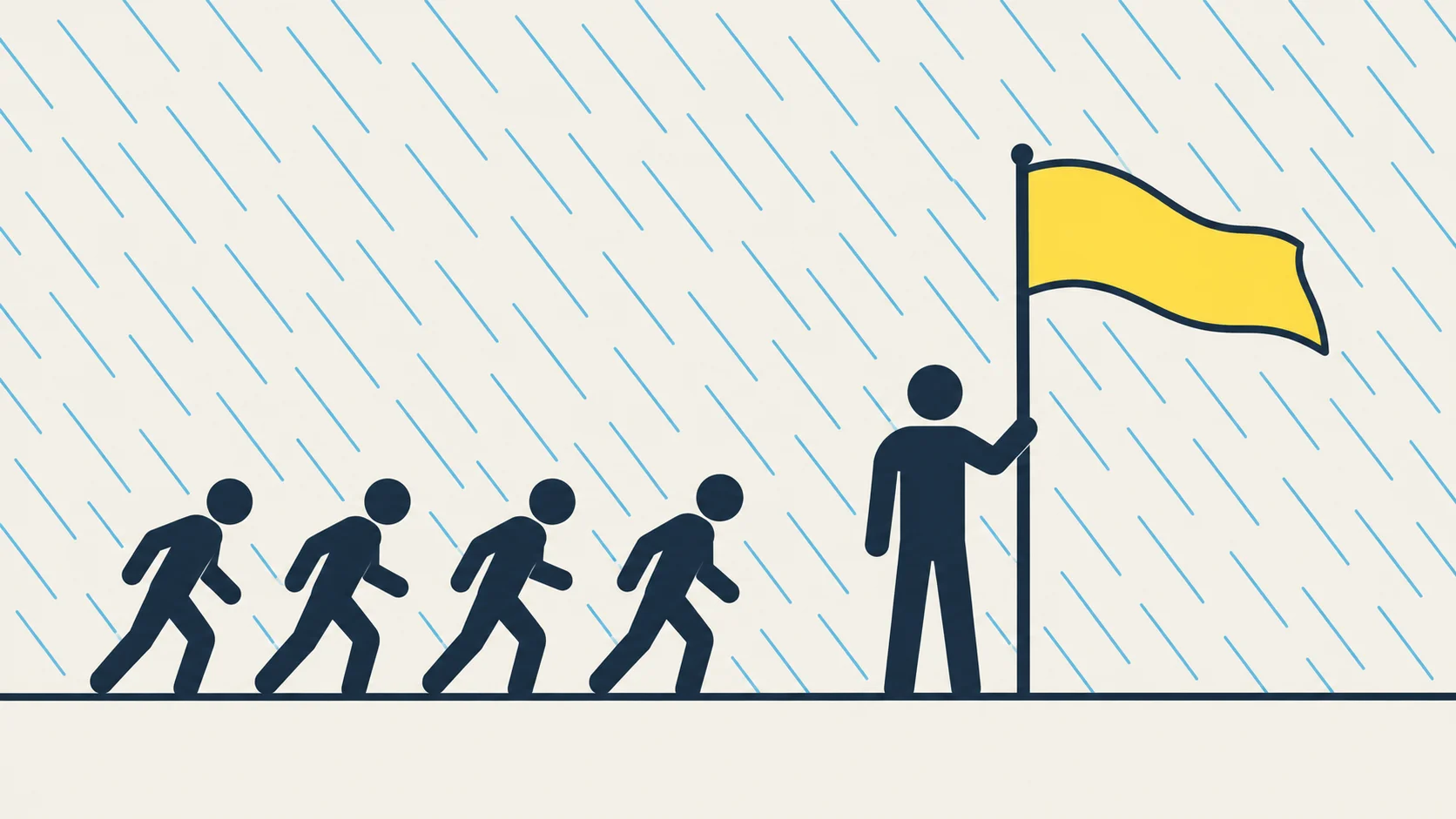
Leadership is frequently imagined as controlled and orderly. In practice, it is often exercised amid uncertainty, fear, and incomplete information. Adaptability, resilience, crisis management, learning, and courage are therefore not secondary attributes; they determine whether a leader can continue functioning when ordinary structures begin to fail.
Washington's endurance at Valley Forge preserved an army that might not have survived. Lincoln's adaptability helped save the Union. Jefferson's decision to declare independence required political courage as well as philosophical conviction. Theodore Roosevelt embodied much of this cluster through military risk, confrontation with monopolies, and an energetic response to political challenges.
The WATT standard recognizes that leaders cannot control every storm they encounter. They can, however, be evaluated by whether they adjust intelligently, remain steady, and continue directing others through it.
 The stormOthers followSteady